

Event planners like you don’t just create memorable moments—you also help protect our planet. Let’s explore sustainable events, one (green) step at a time.
This guide shows you how to build sustainable event design into every stage of event planning—from venues and suppliers to energy, food, materials, travel and reporting.
You’ll learn about:
- The biggest sources of event emissions such as attendee travel, single-use materials, catering and energy
- Designing for circularity
- Engaging stakeholders
- Transparent reporting
What exactly are sustainable events?
Sustainable event practices aren’t a trend—they're a non–negotiable part of event design. And they start with a mindset shift.
Imagine hosting a conference, gala or product launch while creating a positive impact. That’s the heart of sustainability in events. But what does it mean in practice? A sustainable event considers environmental, social and economic impacts during planning, delivery and legacy. The goal is to reduce negative impacts such as carbon emissions, waste and pollution, while increasing positive impact including accessibility, inclusion, local economic value and knowledge sharing.
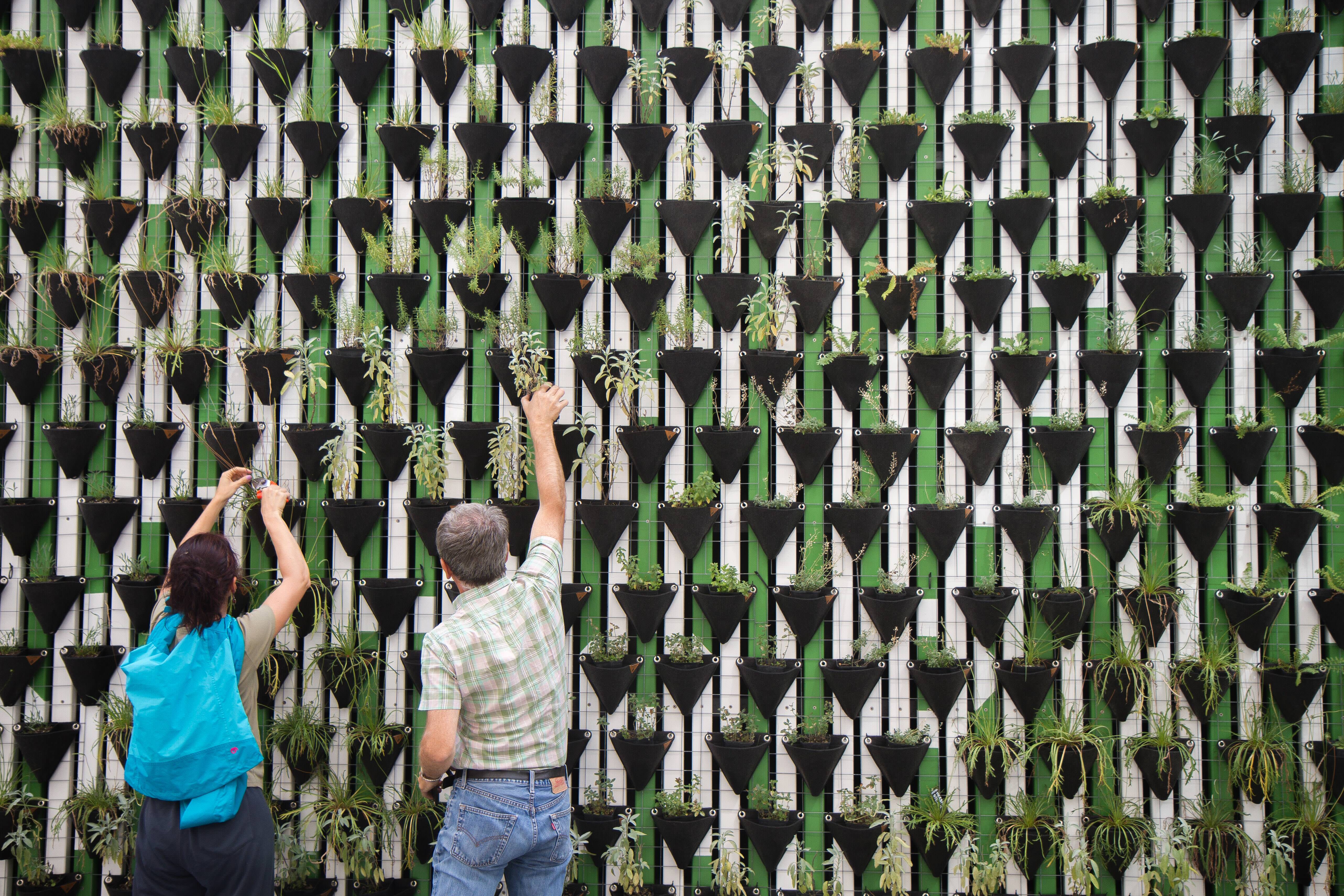
The three pillars of sustainable event planning
A truly sustainable event balances:
- People: Well-being, safety, accessibility, diversity, equity and inclusion; fair labor; community benefits and legacy projects
- Planet: Reducing carbon emissions, energy efficiency, waste reduction, circular materials and responsible sourcing
- Profit: Cost efficiency and long-term ROI through reputation, risk reduction and attendee value
Sustainable event management
Embedding sustainability into each stage of your event can seem like an ever-growing list of requirements and actions, but this framework helps you approach it step by step.
Procurement and suppliers
- Embed sustainability clauses in RFPs and contracts—for example, renewable energy, take‑back programs, low‑carbon transportation and reduced packaging.
- Choose suppliers with transparent reporting and sourcing.
- Request material passports or composition and sourcing data.
Venue selection and certifications
- Choose venues powered by renewable energy, with efficiency measures and robust waste sorting systems.
- Look for sustainability certifications such as ISO 20121.
- Consider public transit access, walkability and bike infrastructure—and promote these options to attendees.
Materials, signage and booths
- Design for reuse. Think modular booths, date‑free signage, durable substrates, standardized hardware.
- Minimize carpet and single-use build materials. Consider reusable or rental systems with take‑back schemes.
- Pre-plan donation routes for furniture, florals and unopened goods. And plan recycling pathways for banners and textiles.
Technology and data
- Replace printed materials with digital wayfinding, apps or QR-code content.
- Collect structured data with clear outcomes and dashboards so you can report accurately and improve year on year.
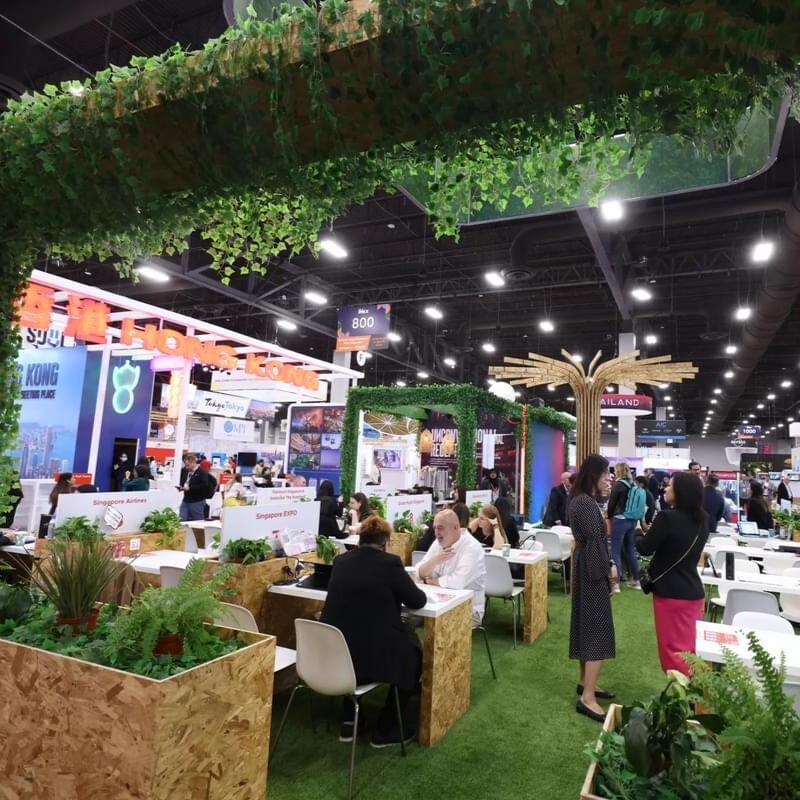
Carbon reduction: measure, reduce, report
Reducing your event’s emissions can feel daunting.
Here are four steps to follow to reduce your carbon emissions.
1. Set a baseline
Review your event cycle—buildup, the event itself and breakdown. Decide what you’ll measure: energy, travel, materials, catering and waste. Then set realistic goals.
If you need guidance, refer to the GHG Protocol categories, such as on-site energy; supplier and attendee travel; purchased goods and services.
2. Identify the biggest sources
For most events, attendee travel is the largest emissions source, followed by venue energy use, materials and catering.
Prioritize solutions that address your top contributors.
3. Reduce emissions
Travel: Promote travel by train or other low‑carbon choices.
Energy: Choose venues with renewable power or those that can purchase certified renewable energy; ask for LED or energy-efficient equipment.
Materials: Minimize carpet and build materials; rent or reuse materials; switch to recycled, recyclable or certified content with take‑back schemes
Food: Offer plant‑forward menus, source seasonal food locally, plan portions to reduce food waste and donate surplus through reputable partners.
4. Report transparently
Document your methods. Separate reductions from offsets. And show year-on-year improvements.
Use simple charts and dashboards to explain sources, data and results.

How to make a difference as a sustainable event planner
If you’re wondering, “Can my event really make a difference?”—here are three practical ways you can make a difference with a sustainable event design:
1. Conservation of resources
Water: Encourage attendees to bring reusable water bottles and offer refill stations. However, in drought-stricken regions, single-use items may have a lower overall impact than washing glasses. It's important to understand your local context.
Energy: Opt for LED lights, solar energy and energy-efficient equipment. Many venues can switch to renewable energy instantly.
2. Waste management for events
Follow the three Rs: reduce, reuse, recycle—aiming ultimately for a zero-waste event.
- Reduce: Skip unnecessary printed materials; consider digital instead
- Reuse: Use date-free, evergreen signage that you can use at your next event.
- Recycle: Identify recycling options for textiles, banners and silicone-edge graphics.
3. Sustainable food and drink solutions:
Locally sourced ingredients:
Ask whether your menu can be sourced locally. Fresh produce from nearby farms reduces food miles and supports local economies.
Plant-based options:
Nudge guests toward planet-friendly options by listing vegan options first or showing the carbon footprint of each dish.
At our shows we invite our attendees and exhibitors to support our sustainability journey by signing up to our People and Planet Pledge to take significant sustainability steps before, during and after their time at the show. The impact of a sustainable event ripples far and wide, touching communities, inspiring suppliers, and boosting business and their employees. Sustainability isn’t a constraint; it’s an invitation to reimagine events and deliver a positive impact on our planet.
FAQs
What is a sustainable event?
An event designed and delivered to reduce environmental impact, enhance social value and stay financially viable across its lifecycle.
How can I start planning more sustainable events?
Set a baseline, prioritize the biggest impacts (usually travel, energy, materials, F&B), reduce those impacts and report your results.
How do I measure my event’s carbon footprint?
Define your scope (travel, energy, materials, F&B, waste), collect activity data (kWh, miles, kg, meals), apply recognized emissions factors and document assumptions.
What are the main sources of emissions at events?
Most emissions come from attendee travel, on-site energy, materials and food and beverage.
What’s the difference between reduction and offsetting?
Reduction is lowering your own emissions. Offsetting is funding external projects (such as tree planting) to compensate for emissions.
How can I reduce travel emissions?
Choose venues with strong public transit access and promote travel by train. Offer pooled transfers such as shared taxis or shuttle buses.
What makes a menu low carbon?
Plant‑forward dishes, seasonal and local sourcing and caterers who minimize waste.
Can digital solutions always replace print?
Not always. Choose digital when it reduces overall impact and consider energy use, hardware and accessibility.
How do I handle waste responsibly on site?
Prevent first, then reduce and reuse. Plan donation and recycling streams, label bins clearly, and brief cleaning partners and exhibitors.
Which certifications or initiatives should I know?
ISO 20121, the GHG Protocol and the Net Zero Carbon Events initiative.
What does “water‑wise” mean?
Choosing menus and service models that minimize water use and understanding local water stress when choosing between reusable and single‑use items.
What data should I collect during the event?
Energy (kWh), travel modes and distances, materials by type/weight, waste by stream, meals by type (red meat, meat, pescatarian, vegetarian, vegan) and any donations or reuses.